China has become a major sourcing base for the Phone Necklace Holder market. Its manufacturers offer broad choices, from slim silicone straps to adjustable crossbody designs. Many factories support logo printing, color matching, packaging, and small trial orders. However, attractive photos do not prove reliable quality. Buyers still need to inspect materials, connectors, stitching, and testing records.
Dr. Alan Hedge, a respected ergonomics researcher, once stated, “Good design fits the user, not the other way around.” This principle matters for every Phone Necklace Holder. A comfortable holder should rest smoothly against the neck, avoid sharp edges, and keep the phone stable while walking. The strap should not twist easily. The connector should resist sudden pulling. Small details matter.
Experienced sourcing teams often request samples before discussing large production volumes. They test the holder with different phone weights, cases, and screen sizes. They also check whether the strap leaves marks after extended use. Some Chinese suppliers perform well in these areas. Others may focus too heavily on appearance and overlook long-term comfort. That is where judgment becomes necessary.
This guide examines China’s leading Phone Necklace Holder manufacturers through product quality, customization ability, production capacity, communication, and service reliability. It also considers an uncomfortable reality: the lowest quotation may create higher costs later. Weak hardware, inconsistent colors, or delayed shipments can damage a retailer’s reputation. Careful comparison is essential, even when the supplier seems impressive at first.
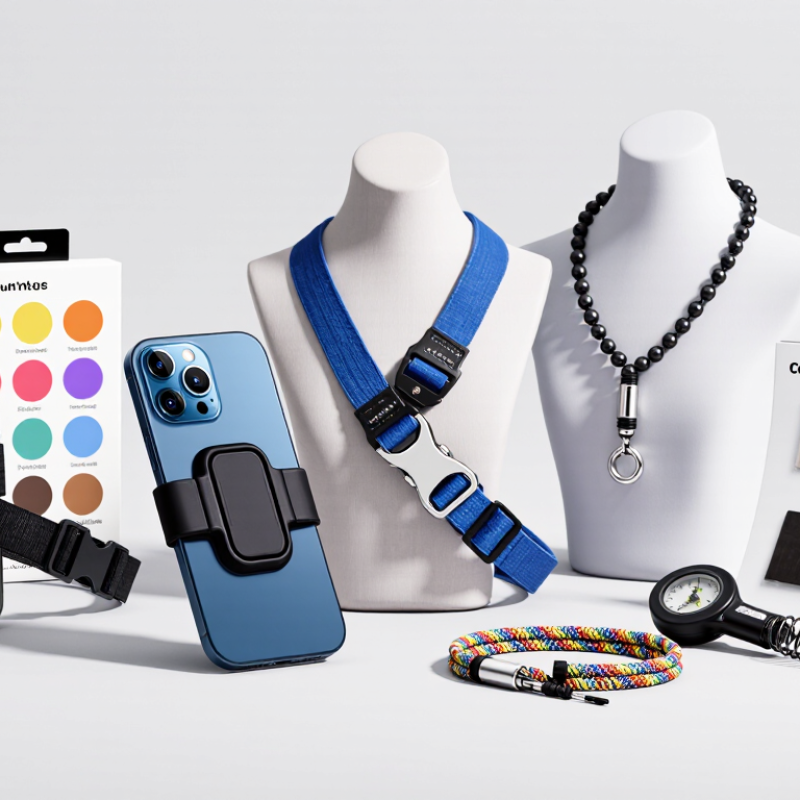
China Top Phone Necklace Holder Manufacturers?
What Is a Phone Necklace Holder and How Does It Work?
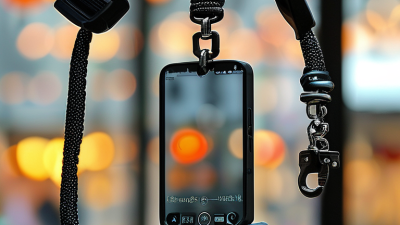
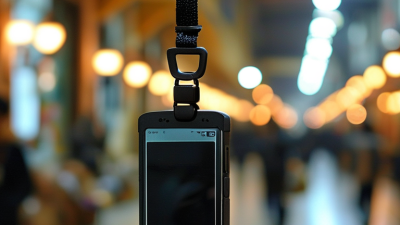
A phone necklace holder keeps a phone close by using a strap worn around the neck or across the body. Most designs use a thin tether patch placed inside a phone case. A small loop extends through the case’s charging-port opening, where it connects to the strap with a clip or ring. The phone stays usable while hanging securely against clothing. It is simple.
The patch spreads the strap’s pull across the case rather than relying on adhesive stuck to the phone itself. Still, the fit matters. Not every case fits. A loose case, blocked port opening, or unusually heavy phone may make the setup unstable. Check that the patch does not cover the charging port or interfere with buttons. Tug gently on the strap before walking with the phone, and inspect the loop and clip for wear over time.
In practical use, the strap can help when taking photos, checking directions, or carrying groceries. Adjust its length so the phone rests comfortably, without swinging into a table or doorway. I have found that a soft strap feels better during a long day, though it can twist and need readjusting. Small detail, real difference. A phone necklace holder adds convenience, but it is not a substitute for a sturdy case or careful handling.
| Topic | Feature or Checkpoint | Practical Information | What Buyers Should Verify |
|---|---|---|---|
| Product Basics | |||
| Definition | Wearable phone holder | A phone necklace holder suspends a smartphone from a cord or strap worn around the neck or across the body. It keeps the phone accessible without requiring the user to hold it continuously. | Check whether the product is designed for neck wear, crossbody wear, or both. |
| How it works | Strap and phone connection | The strap connects to the phone through a compatible case, a case-mounted anchor tab, or a dedicated holder. The phone can usually be lifted off the strap for normal handheld use. | Confirm that the attachment method fits the intended phone case and does not obstruct charging or ports. |
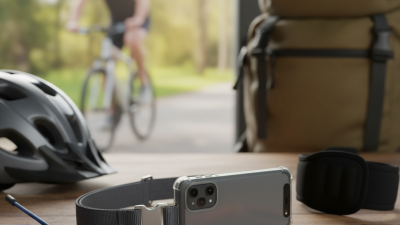
| Common configurations | Case-integrated, tether-tab, or pouch style | Some designs attach directly to a compatible case; others place a thin anchor tab inside a case, beneath the phone. Pouch-style holders enclose some or all of the device. | Ask for compatibility details, installation instructions, and product samples before placing a bulk order. |
| Materials and Design | |||
| Strap materials | Textile, synthetic leather, or cord | Straps may use woven polyester, nylon, cotton blends, or synthetic leather. Material choice affects feel, appearance, abrasion resistance, and cleaning requirements. | Request material specifications and check stitching, edge finishing, and color consistency. |
| Connectors and hardware | Clips, rings, adjusters, and tabs | Hardware may include metal or plastic clips and length adjusters. A tether tab is commonly a thin insert that sits between a phone and its case, with a connector extending through a case opening. | Check connector security, tab thickness, case fit, and whether metal components have smooth, finished edges. |
| Adjustability | Length and wearing position | Adjustable straps can be worn at different lengths and may be configured for neck or crossbody use. Actual adjustment range varies by design. | Request the measured minimum and maximum strap lengths rather than relying on general descriptions. |
| Compatibility, Safety, and Quality | |||
| Phone and case compatibility | Device size, case openings, and charging access | Compatibility depends on the phone case, its bottom opening, and the design of the anchor or holder. Some cases may be unsuitable, including cases with no appropriate opening or cases that do not hold the phone securely. | Test the product with representative phone models and cases, including any cases used by the target customers. |
| Load and retention | Attachment strength and everyday use | A phone necklace holder is intended to carry a phone during ordinary use, but straps and connectors can wear or fail. No holder should be assumed to prevent drops in every situation. | Ask for the supplier's test method and results; inspect seams, connectors, and attachment points. Avoid claiming that a product is drop-proof without substantiation. |
| Comfort and wear | Strap width, surface, and weight distribution | A wider or padded strap may feel different from a narrow cord, while phone weight and strap length also affect comfort. The best choice depends on intended use and wearer preference. | Evaluate comfort with the intended phone and case, not with an unloaded sample. |
| Quality control | Inspection and consistency | Useful checks include strap dimensions, stitching, hardware operation, attachment security, finish quality, and consistency between production samples and finished goods. | Agree on product specifications, inspection criteria, packaging requirements, and procedures for handling defects before production. |
| Sourcing Considerations | |||
| Manufacturer evaluation | Production capability and documentation | When sourcing in China, buyers can compare a supplier's relevant production experience, material sourcing, sample quality, communication, production capacity, and quality-control process. | Request verifiable business and factory information, a written specification, samples, and any applicable test or compliance documents for the destination market. |
| Customization | Colors, strap length, packaging, and printing | Customization options depend on the supplier and product design. Changes to materials, hardware, colors, or packaging may affect sampling and production timelines. | Confirm artwork, color references, sample approval, order quantity requirements, and lead times in writing. |
| Intended use | Travel, events, retail, or daily convenience | Phone necklace holders can be useful when frequent phone access is important, such as during travel, events, or everyday errands. They do not replace secure handling or device protection. | Choose the design according to user needs, phone compatibility, wearing style, and the conditions in which it will be used. |