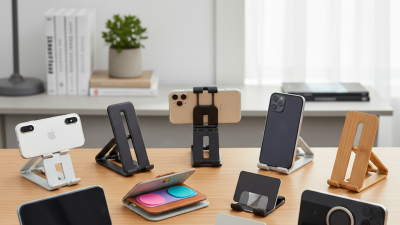
China Top Charging Stand for Multiple Devices Suppliers?

As homes and offices accumulate phones, tablets, watches, and wireless earbuds, charging becomes a daily organization problem. A reliable Charging Stand For Multiple Devices can reduce cable clutter and improve charging visibility. It can also protect valuable devices from unstable power.

The market opportunity is expanding with connected-device ownership. IDC’s Worldwide Quarterly Mobile Phone Tracker reported 1.24 billion smartphone shipments globally in 2024, representing 6.2% annual growth. Canalys also reported that China’s smartphone market recovered in 2024, supported by replacement demand and premium-device upgrades. These figures do not measure charging stands directly. However, they indicate a broader installed base requiring practical power accessories.

China remains a major sourcing center for charging hardware, electronics assembly, and accessory design. Strong suppliers should provide USB-C Power Delivery testing, thermal protection, over-current safeguards, and clear output specifications. Qi certification matters for wireless charging models. The Wireless Power Consortium states that Qi2 improves magnetic alignment and charging consistency across compatible products.

Real testing matters more than attractive photographs. Check hinge strength, surface stability, cable routing, and heat after several hours. Ask for laboratory reports, factory audit records, warranty terms, and sample consistency. TÜV Rheinland and UL research frequently emphasizes safety testing and traceable quality systems for consumer electronics.

A supplier list is never perfect. Some specifications still look better on paper than on a crowded desk. Buyers should compare independent samples, not promises alone. This guide examines leading Chinese suppliers through product reliability, engineering depth, manufacturing experience, certifications, and communication quality. The goal is practical sourcing, not exaggerated rankings.
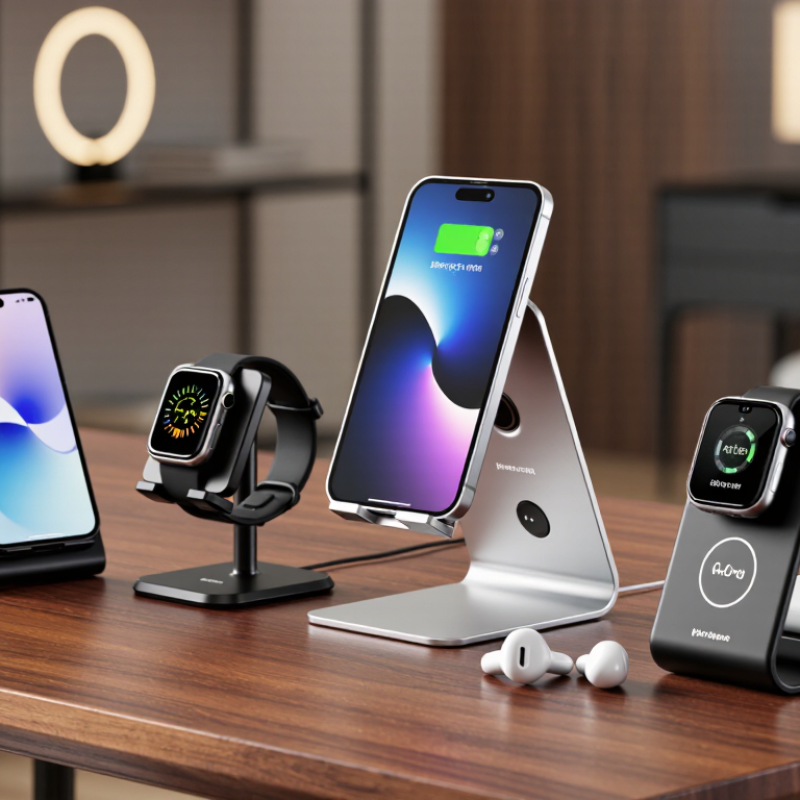
China Top Charging Stand for Multiple Devices Suppliers?

What Makes a Top Charging Stand Supplier for Multiple Devices?

A top charging stand supplier for multiple devices must understand real workspace demands. Phones, tablets, watches, and earbuds often share one crowded desk. A reliable supplier designs around this daily situation, not only attractive product photos. Strong suppliers provide stable charging performance, sensible spacing, and clear compatibility details. They also explain power distribution when several devices charge together.

Manufacturing experience matters. Ask how the supplier tests heat, cable strain, surface stability, and repeated installation. A useful sample should survive ordinary handling, not just a showroom inspection. I would check the stand with different device sizes and protective cases. Small gaps can become frustrating during busy mornings. Good suppliers offer material specifications, production records, and inspection reports from qualified testing bodies. They should also communicate honestly about charging limits.

Clear communication separates a dependable partner from a temporary seller. Response speed matters, but accurate answers matter more. The supplier should confirm drawings, packaging details, lead times, and quality checkpoints in writing. Samples should match later production as closely as possible. That is not always perfect. Colors may vary slightly, and early samples can reveal weak cable routing. A careful supplier accepts feedback and adjusts the design instead of defending every decision. Flexible customization, consistent batch control, and transparent after-sales support help buyers manage long-term use. Low prices can be useful, but unexplained savings deserve closer inspection.


Key Features of Multi-Device Charging Stands

A well-designed charging stand turns a crowded desk into a more usable charging station. Strong models support several devices without forcing every cable into one narrow gap. Look for clearly labeled ports, balanced power distribution, and broad compatibility with phones, tablets, earbuds, watches, and small accessories. A stable base matters. Rubber feet should resist sliding when one device is removed. Vertical slots should hold devices upright, even with slim protective cases. That detail is easy to overlook.

Heat management is another key feature. Ventilated spacing helps prevent warm surfaces from touching each other during extended charging. Protection against overcurrent, overvoltage, and excessive temperature improves confidence. However, buyers should verify technical specifications instead of trusting vague claims. Cable channels keep connectors tidy and reduce bending near the plug. Durable materials, clean edges, and visible charging indicators support daily use. Still, no stand fits every setup. Some slots may feel tight, and shared power can slow charging.

Tips: Measure your devices with cases installed. Check total output, port types, and included adapters. Test each slot before daily use. Leave airflow around the stand, especially during long charging periods. A short cable often works better than a tangled long one.

How to Compare Charging Stand Suppliers

When comparing China suppliers of charging stands for multiple devices, begin with the factory, not the catalog. Ask for production photos, material specifications, and recent quality records. A reliable supplier should explain its testing process clearly. Vague answers are warning signs. Check whether the stand supports phones, tablets, watches, and earbuds without unstable cables. Request a sample before discussing large orders.

Evaluate charging performance under real conditions. Ask about power distribution when several devices charge together, heat control, connector durability, and compatibility with common charging standards. Measure the sample on a crowded desk. Does it wobble? Do devices slide? Can users remove one device without moving the others? Small details affect daily satisfaction. Certifications and inspection reports also matter, but documents should match the actual product. Paperwork alone proves little.

Compare minimum order quantities, tooling fees, packaging, lead times, warranty terms, and replacement procedures. Communication speed is useful, but technical accuracy matters more. A supplier may answer quickly and still misunderstand a specification. I once overlooked cable length during a comparison, and the finished arrangement looked untidy. That mistake was simple, yet avoidable. Request a written specification sheet and confirm every revision. Leave room for uncertainty, because samples and mass production may not perform identically.

How to Compare Charging Stand Suppliers

This brand-neutral evaluation model assigns a total of 100 points to the factors most relevant when sourcing charging stands for multiple devices. Product safety and charging compatibility receive the highest weights, followed by quality consistency, customization capability, delivery reliability, and commercial terms.

Manufacturing Quality, Safety, and Compatibility Standards

When choosing a China-based charging stand supplier, manufacturing quality should be verified beyond polished product photos. Factory visits, process records, and sample testing reveal more.

A reliable stand needs stable power distribution across every port. Engineers should check wattage limits, connector fit, charging protocols, and heat control. A crowded desk can expose weak airflow quickly. Look for overcurrent, overvoltage, short-circuit, and overtemperature protection. Materials should resist heat and deformation near power components. Enclosures also need suitable flame-resistance ratings. Safety evaluation may reference IEC 62368-1, applicable EMC requirements, and regional certification rules. Requirements vary by market. Do not accept generic certificates without matching model numbers.

Compatibility requires practical testing, not a simple charging claim. Test different device sizes, cable angles, battery levels, and simultaneous charging loads. Measure temperature after several hours. Check whether charging slows unexpectedly. USB Power Delivery and other protocol claims should have supporting test evidence when relevant. Production controls matter too. Inspect incoming components, solder joints, insulation distances, and final functional tests. Clear traceability helps locate defects quickly.

Even experienced buyers can miss small failures. A stand may pass one test and fail under dust, heat, or repeated insertion. Suppliers should welcome independent inspections and corrective-action reports. Perfect claims deserve careful questions. Reliable manufacturing is built through evidence, repeatable testing, and honest limits.

Selecting the Right Supplier for Business and Personal Use

China Top Charging Stand for Multiple Devices Suppliers?

Selecting the right supplier requires more than comparing prices. Business buyers should check charging capacity, connector options, heat control, and production consistency. Ask for product samples before placing a large order. A sample can reveal loose ports, unstable bases, or slow charging that specifications hide. Reliable suppliers should provide clear test records, material details, packaging standards, and realistic delivery schedules. They should also explain how they handle defects and replacement requests.

Personal users need a simpler review. Consider desk space, device compatibility, cable management, and daily charging habits. A compact stand may suit a bedroom, while an office needs stronger construction and easier cleaning. Suppliers with responsive communication are safer choices. Delayed replies often create bigger problems during customization or after-sales service. I have seen buyers focus too heavily on appearance. That choice can age badly when hinges loosen or surfaces scratch.

Tips: Request samples, written specifications, and inspection photos. Compare at least three suppliers. Check whether the stand supports your actual devices, not only popular models. Discuss minimum order quantities and customization fees early. Ask about packaging protection, especially for long-distance shipping. Do not trust impressive claims without evidence. One overlooked detail matters: the power adapter may not be included. Also, supplier information can change, so review certificates and quality documents regularly.

China Top Charging Stand for Multiple Devices Suppliers? - Selecting the Right Supplier for Business and Personal Use

Evaluation Dimension Recommended Data to Compare Business-Use Requirement Personal-Use Requirement Documents or Evidence to Request
Supplier Type Manufacturer, OEM/ODM factory, or trading company Direct manufacturing access, engineering support, stable production capacity, and documented quality control Reliable communication, low order complexity, and convenient after-sales support Business registration, factory profile, production photos, audit report, and supply-chain references
Charging Architecture Number of charging positions, wired USB-C ports, wireless charging areas, and power distribution method Independent power management for simultaneous charging and clear total-output limits Simple one-cable setup for a phone, earbuds, smartwatch, or tablet Electrical block diagram, user manual, rated input/output table, and charging test results
USB-C Power Delivery Supported USB Power Delivery profile, maximum wattage, and output under simultaneous use For laptop-oriented products, verify the required USB-C PD profile and whether the total output remains adequate under load Verify compatibility with the devices being charged; a higher rated output does not guarantee faster charging for every device USB-IF-related test information where applicable, PD negotiation logs, and independent laboratory reports
Wireless Charging Compliance Wireless charging standard, certified power level, alignment tolerance, and foreign-object detection Use certified wireless charging technology and validate performance with the target device range Prioritize magnetic alignment, case compatibility, low heat, and stable charging overnight Certification record, thermal test report, foreign-object detection test, and compatibility matrix
Safety Protection Over-voltage, over-current, over-temperature, short-circuit, surge, and foreign-object protection Protection functions should be verified at component, finished-product, and production-line levels Select a stand with stable temperature control, non-slip construction, and a certified external power adapter Safety test report, risk assessment, protection-circuit description, and production inspection records
Target-Market Compliance Applicable electrical, electromagnetic compatibility, environmental, and radio requirements for the destination market Confirm market-specific compliance before shipment; requirements differ between the European Union, United States, United Kingdom, and other regions Check that the included adapter and plug type are suitable for the country of use Declaration of Conformity, EMC report, safety report, RoHS documentation, REACH statement, and applicable local filings
Material and Construction Housing material, hinge durability, cable routing, non-slip base, ventilation, and surface finish Use reinforced construction and repeatable assembly quality for frequent handling or office deployment Prioritize compact dimensions, stable weight distribution, foldability, and protection against scratches Material specifications, drop-test results, hinge-cycle test, abrasion test, and pre-shipment inspection report
Thermal Performance Surface temperature, internal temperature, thermal throttling behavior, and performance during simultaneous charging Require testing at maximum rated load and under elevated ambient-temperature conditions relevant to the destination market Choose a design that remains comfortable to touch and does not repeatedly interrupt charging Thermal-camera images, temperature logs, maximum-load test, and ambient-condition test method
Customization Capability Logo placement, color, packaging, firmware or indicator settings, cable length, and structural changes Require documented engineering-change control, approved samples, and written confirmation of intellectual-property ownership Limit customization unless it improves fit, usability, or compatibility CAD drawings, approved golden sample, packaging artwork, change-control procedure, and tooling agreement
Quality-Control Process Incoming inspection, in-process inspection, final functional testing, aging test, and sampling standard Use written acceptance criteria and independent pre-shipment inspection for larger orders Inspect the sample for charging stability, fit, finish, heat, and cable quality before purchase Quality manual, inspection checklist, defect classification, production test records, and corrective-action reports
Order and Production Terms Minimum order quantity, sample lead time, mass-production lead time, payment terms, and capacity plan Agree on realistic delivery milestones, buffer stock, spare parts, and escalation procedures Prefer ready-to-ship or low-volume options when customization is unnecessary Quotation, pro forma invoice, production schedule, capacity statement, and signed quality agreement
Packaging and Logistics Carton dimensions, gross weight, packaging drop protection, palletization, and shipping terms Calculate landed cost using product, packaging, freight, duties, inspection, and warranty expenses Select protective packaging without excessive size or single-use materials Packing specification, carton test report, commercial invoice, packing list, and shipping quotation
Warranty and After-Sales Service Warranty period, return-material authorization process, response time, spare-parts policy, and failure analysis Require written service-level commitments and traceability by batch or production date Choose clear replacement or refund support through the seller or distributor Warranty terms, service workflow, failure-analysis template, spare-parts list, and contact escalation chart
Supplier Selection Score Use a weighted score from 1 to 5 for safety, compliance, charging performance, quality, cost, delivery, and service Recommended emphasis: compliance and safety first, followed by reliability, total cost, capacity, and delivery performance Recommended emphasis: compatibility, safety, ease of use, compactness, heat control, and warranty support Keep the completed scorecard, sample-test results, quotation comparison, and final approval record
Data-use note: Technical ratings, certifications, lead times, minimum order quantities, and warranty terms vary by product configuration and destination market. Verify every value against the supplier’s current specification, test reports, and signed commercial documents before placing an order.