How to Source the Best Phone Strap Holder in 2026?
Sourcing the best Phone Strap Holder in 2026 requires more than comparing colorful designs and low prices. The product must protect an expensive smartphone, feel comfortable in daily use, and survive repeated pulling, twisting, and pocket friction. GSMA Intelligence reported 4.7 billion mobile internet users worldwide in 2023. That figure shows the enormous audience behind mobile accessories. It also raises buyer expectations. A weak adhesive tab can fail beside a subway door. A rough strap can irritate skin after several hours.
Market evidence supports careful supplier selection. Grand View Research identifies steady growth in the global mobile phone accessories market through 2030. However, growth does not guarantee quality. Supplier claims still need verification. Ask for tensile-strength results, adhesive aging data, material declarations, and batch-level inspection records. Short samples help. They reveal loose stitching, sharp edges, coating cracks, and inconsistent dimensions before large orders begin. Small details matter.
The best sourcing process combines practical testing with recognized compliance systems. Suppliers should explain whether materials meet applicable RoHS, REACH, or other destination-market requirements. ISO 9001 certification can indicate controlled processes, but it does not prove every Phone Strap Holder is reliable. That distinction is often missed. A responsible buyer should check factory capability, production history, warranty terms, and independent test evidence. Industry reports provide direction, not final answers. My own assessment would include a drop test, a 24-hour load test, and repeated attachment checks on glass, silicone, and textured cases. No sourcing guide is perfect. Phone models change, adhesives age, and user habits vary. That uncertainty deserves honest attention throughout the 2026 supplier evaluation.
Define Requirements Using IDC’s 1.24B-Unit 2024 Smartphone Shipment Baseline
Sourcing the best phone strap holder in 2026 starts with a realistic demand baseline. IDC’s Worldwide Quarterly Mobile Phone Tracker reported approximately 1.24 billion smartphone shipments in 2024. That volume signals broad compatibility needs, not one universal design. GSMA Intelligence reported about 4.7 billion mobile internet users by the end of 2024. Many users carry phones daily, often while commuting, shopping, or recording short videos.
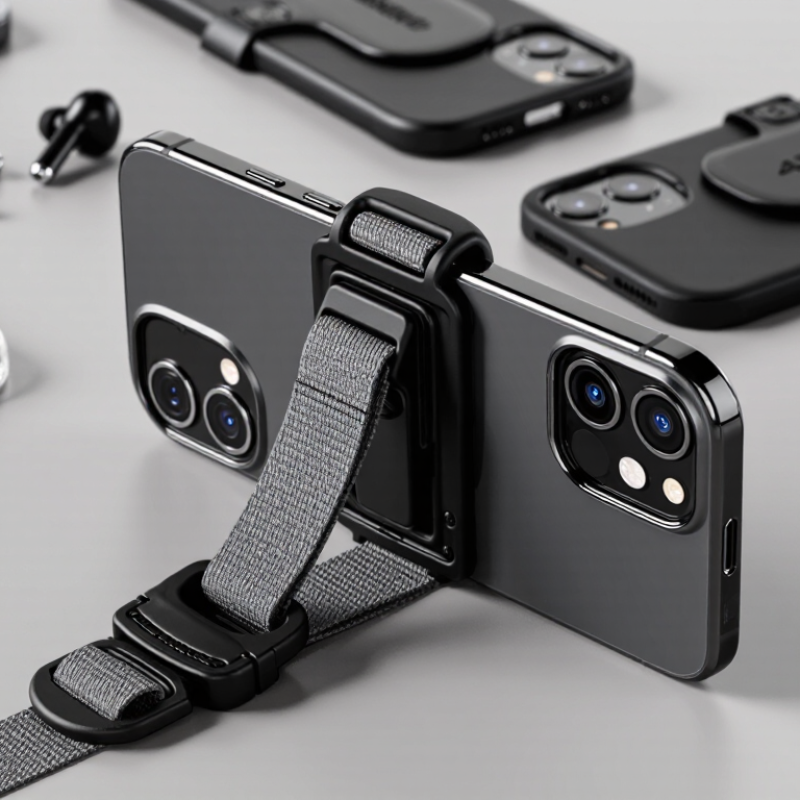
Define the holder around actual handling conditions. Specify supported phone dimensions, case thickness, strap length, and a minimum pull-force target. A practical sample should survive repeated drops, twisting, and pocket friction. Check the clasp after 1,000 open-and-close cycles. Test silicone, woven fabric, and recycled polymer separately. Comfort matters too. A sharp edge becomes noticeable quickly.
My first sourcing specification was too optimistic. It focused on appearance and ignored sweat, dust, and oversized cases. That mistake increased sample revisions. Require material declarations, batch inspection records, and clear tolerance ranges from suppliers. Ask for production samples, not only polished prototypes. For early orders, a moderate minimum quantity reduces inventory risk. Keep color variation under review. Small flaws remain possible. The 1.24 billion-unit shipment baseline supports scale, but it does not prove every design will fit every user. 马会
Screen Materials Against ASTM D4169 Drop-Test Performance Criteria
How to Source the Best Phone Strap Holder in 2026?
A reliable phone strap holder starts with disciplined material screening. Examine the strap webbing, connector, adhesive, stitching, and package protection separately. Nylon may resist abrasion, while polyester often offers steadier dimensional control. Material choice alone proves little. Test the complete assembly.
ASTM D4169 evaluates packaged products under distribution hazards, not just a holder’s personal-use durability. Select a distribution cycle that reflects your shipping route, package weight, and handling conditions. The test plan may include vibration, compression, impact, and free-fall drops. Assurance levels also affect severity. That distinction matters.
Ask suppliers for test reports with sample identification, conditioning details, test sequence, and measured damage. A serious report should state whether the package remained closed and whether the holder still functioned afterward. Inspect the clasp after each drop. Check for torn webbing, stretched holes, cracked plastic, and phone-release risk. Test the weak point.
Do not accept a report copied from another product. Request production samples, not only laboratory prototypes. Compare ten or more units when possible, because one excellent sample can hide inconsistent stitching. Independent laboratory testing adds credibility, especially when supplier data lacks raw observations. Still, ASTM D4169 cannot predict every real-world failure. Wet cartons, sharp package edges, and repeated handling may expose weaknesses. I have seen apparently strong connectors loosen after ordinary cycling. That result is uncomfortable, but useful. Recheck the design, packaging fit, and incoming inspection limits before placing a larger order.
Audit Suppliers Through ISO 9001, AQL 1.5, and Factory Inspections
How to Source the Best Phone Strap Holder in 2026?
A reliable phone strap holder begins with supplier evidence, not attractive samples. ISO’s 2023 Survey recorded 1,265,216 ISO 9001 certificates worldwide. However, certification alone cannot prove consistent production. Check the certificate scope, issuing body, expiry date, and covered factory address. Ask for process maps, calibration records, incoming-material checks, and recent corrective-action reports. I would also compare the approved sample with mass-production units. Small changes in coating thickness can affect grip and durability.
AQL 1.5 must be understood correctly. It is a sampling acceptance limit, not a promise that 1.5% of every shipment is defective. Use ANSI/ASQ Z1.4-based inspection plans, defining lot size, inspection level, and acceptance numbers before production. Inspect strap stitching, adhesive strength, metal edges, buckle movement, dimensions, packaging, and labeling. A factory inspection should include production-line observation, worker instructions, traceability records, and random carton selection. QIMA’s 2024 quality and sustainability reporting continues to show why factory-level verification matters when supplier performance varies between orders. My own preference is simple: test products after conditioning, not only when they look new.
Tips: Request a live video audit, then schedule an independent pre-shipment inspection. Photograph failed units and record serial or batch codes. Keep retention samples. Do not rely on verbal promises. A rushed audit can miss rework hidden behind finished cartons. That mistake is easy to make.
Compare Landed Costs Using 2026 Demand and Smartphone Shipment Forecasts
How to Source the Best Phone Strap Holder in 2026?
A phone strap holder should be sourced through landed-cost analysis, not unit price alone. International Data Corporation’s Worldwide Quarterly Mobile Phone Tracker indicates that global smartphone shipments remain near 1.2 billion units annually. Its 2026 outlook suggests modest growth, with replacement demand varying across regions. Counterpoint Research also expects premium smartphone demand to support accessory purchases, although economic pressure may limit impulse spending.
Demand is uneven.
Build three forecast cases: conservative, expected, and high-growth. For each case, calculate product cost, packaging, inspection, freight, insurance, duties, payment fees, and expected returns. A holder priced at $0.80 may reach $1.42 after shipping and import charges. That difference can erase the margin quickly.
Check the details physically. Test adhesive strength on glass, silicone, textured cases, and cold surfaces. Measure the strap’s pull resistance after repeated use. Request production samples from at least three suppliers, then compare defect rates and packaging volume. Omdia’s smartphone market forecasts point to continued regional differences, so one universal order quantity may be a mistake. Smaller initial batches could reduce inventory risk, but they may increase freight costs. I would revisit the forecast monthly, because shipment estimates can change faster than a supplier’s quotation.
How to Source the Best Phone Strap Holder in 2026? — Compare Landed Costs Using 2026 Demand and Smartphone Shipment Forecasts
| Destination Market |
2026 Smartphone Shipment Forecast
(Million Units) |
Accessory Demand Signal |
Recommended Phone Strap Holder Specification |
Indicative FOB Cost
(USD/Unit) |
Freight & Insurance
(USD/Unit) |
Indicative Duty Rate |
Import Handling
(USD/Unit) |
Estimated Landed Cost
(USD/Unit) |
Suggested Retail Price
(USD/Unit) |
Source Priority
(100) |
| North America |
285 |
High; strong replacement and impulse-accessory potential |
Adjustable braided nylon, 18–22 cm, reinforced metal connector, retail-ready packaging |
$0.68 |
$0.09 |
6.0% |
$0.05 |
$0.87 |
$9.99–$12.99 |
92 |
| Western Europe |
125 |
High; preference for durable, repairable and lower-waste accessories |
Braided recycled-fiber strap, adjustable length, replaceable connector, paper-based packaging |
$0.76 |
$0.10 |
6.5% |
$0.05 |
$0.97 |
$10.99–$14.99 |
89 |
| India |
165 |
Very high; large installed base and value-focused accessory demand |
Basic silicone loop, 15–20 cm, lightweight connector, compact polybag or paper sleeve |
$0.42 |
$0.11 |
10.0% |
$0.06 |
$0.64 |
$3.99–$6.99 |
87 |
| Latin America |
115 |
High; price sensitivity favors simple designs and low shipping volume |
Silicone-and-nylon hybrid, adjustable, reinforced stitching, moisture-resistant packaging |
$0.55 |
$0.14 |
18.0% |
$0.08 |
$0.90 |
$7.99–$10.99 |
81 |
| Southeast Asia |
150 |
High; rapid device replacement and mobile-commerce growth support add-on sales |
Adjustable nylon strap, lightweight aluminum connector, water-resistant coating |
$0.62 |
$0.07 |
5.0% |
$0.04 |
$0.76 |
$6.99–$9.99 |
90 |
| Middle East & Africa |
105 |
Moderate to high; heat, dust and outdoor use increase durability requirements |
Wide woven nylon strap, corrosion-resistant connector, UV- and sweat-resistant finish |
$0.72 |
$0.16 |
8.0% |
$0.07 |
$1.02 |
$9.99–$13.99 |
78 |
Calculation basis: Estimated landed cost = (FOB cost + freight and insurance) × (1 + indicative duty rate) + import handling. Figures are in USD per unit and exclude VAT/GST, domestic delivery, warehousing, marketplace fees, tooling, testing, certification and payment charges. The shipment figures are 2026 planning midpoints within a global smartphone shipment forecast range of approximately 1.1–1.3 billion units. Demand signals and source priorities are derived from shipment scale, expected accessory attach potential, durability requirements and landed-cost efficiency. Final duty rates must be confirmed against the destination country, product materials, declared HS classification and country of origin.