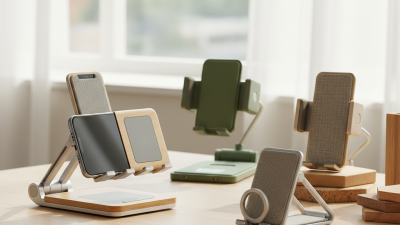
Top 10 Rotation Phone Holders for Global Buyers
Choosing the right Rotation Phone Holder is rarely as simple as comparing prices. Global buyers must examine stability, rotation range, installation method, and long-term durability. A holder that feels secure on a smooth desk may loosen inside a moving vehicle. Materials also matter. Reinforced nylon, aluminum joints, and silicone contact pads can affect grip, vibration control, and device protection.
Don Norman, a leading authority in human-centered design, said, “Design is really an act of communication.” That principle applies directly to every Rotation Phone Holder in this guide. A well-designed model should make its purpose clear through smooth movement, firm locking, and intuitive adjustment. It should not require a manual beside the dashboard.
Small details matter.
This list of the Top 10 Rotation Phone Holders for Global Buyers considers practical use across offices, vehicles, retail counters, and travel setups. We compare viewing flexibility, mounting strength, phone compatibility, cable access, and user comfort. Some products appear impressive at first but reveal weak hinges after repeated rotation. Others look plain yet perform reliably every day.
No ranking can predict every workspace. That is an unavoidable limitation. Buyers should still check device dimensions, surface type, climate, and local shipping conditions before ordering. Price is only one part of value. A dependable holder should keep the screen visible, reduce awkward wrist movement, and remain steady when the phone is used frequently. Our evaluation aims to be useful, though real-world testing may expose differences that specifications cannot show.
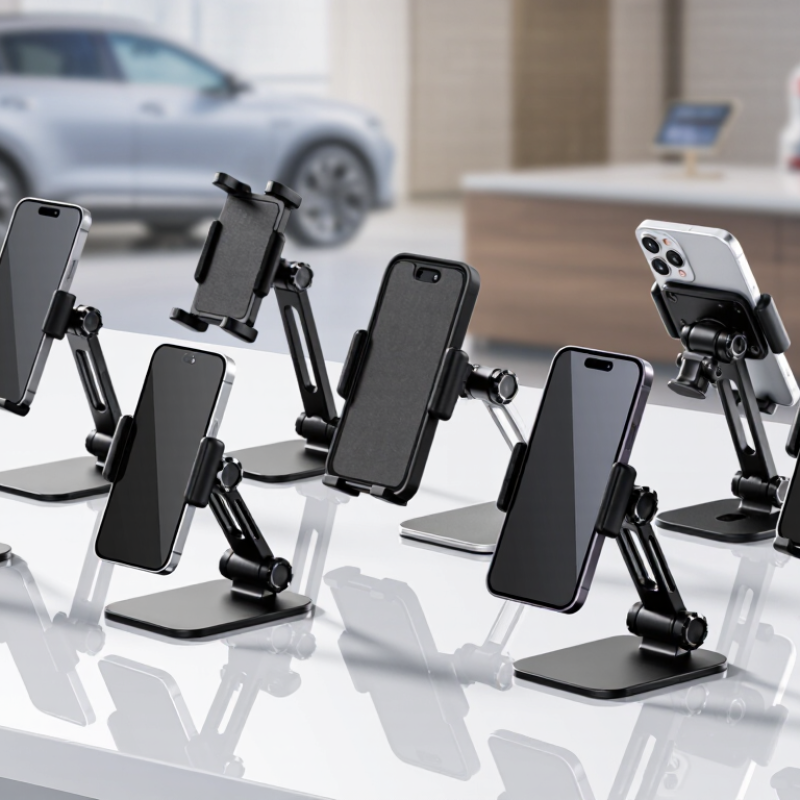
What Rotation Phone Holders Are and How They Work
What Rotation Phone Holders Are and How They Work
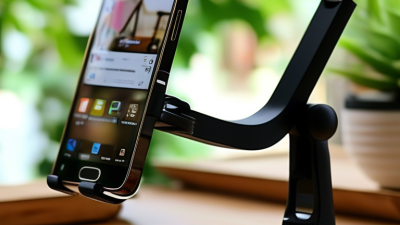
A rotation phone holder is a mount that lets a smartphone turn between portrait and landscape positions. Most models use a rotating hinge, ball joint, or circular gear mechanism. The phone attaches through spring-loaded arms, magnetic force, or an adjustable clamp. Friction keeps the device in place while users change viewing angles. Some holders rotate 360 degrees, but not every hinge feels equally stable.
Demand follows the expanding smartphone base. IDC’s Worldwide Quarterly Mobile Phone Tracker reported approximately 1.24 billion smartphone shipments worldwide in 2024. Pew Research Center also found that smartphone ownership reached 91% among adults in the United States in 2024. These figures show why adjustable mounts matter across homes, vehicles, offices, and retail counters. Buyers should check the holder’s stated weight capacity, clamp width, joint resistance, and compatibility with thick protective cases.
A practical test is simple: place the phone at eye level, rotate it slowly, and observe any sagging. A strong holder should move smoothly without forcing the screen off-center. Suction mounts need clean, flat surfaces, while adhesive bases may weaken in heat. Vent mounts can restrict airflow. That detail is easy to overlook. According to ergonomic guidance from the Occupational Safety and Health Administration, reducing awkward neck and wrist positions supports safer workstation habits, although a phone holder cannot replace proper posture. Specifications can mislead, too. Real stability depends on surface texture, phone weight, and daily handling.
Key Types of Rotation Phone Holders for Global Buyers
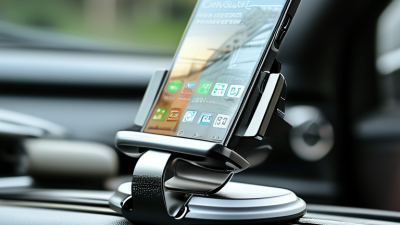
Rotation phone holders vary by mounting method, rotation range, and vehicle compatibility. Dashboard suction holders suit smooth, flat surfaces and often provide strong stability. However, heat, dust, and textured dashboards can reduce adhesion over time. Air-vent clip holders are compact and easy to install, but heavy phones may pull vents downward. Check the vent structure before buying.
Magnetic rotation holders offer quick one-handed attachment and a clean interior. Their strength depends on the magnet, phone case, and mounting plate. Wireless charging versions need accurate alignment and suitable power output. Clamp-style holders grip phones firmly, making them useful for desks, counters, and commercial vehicles. Some clamps leave marks if tightened excessively. That detail is easy to overlook.
For family cars, headrest-mounted holders can support rear-seat viewing and adjustable rotation. They should lock securely and avoid blocking the driver’s view. Bicycle and motorcycle holders need stronger clamps, vibration resistance, and weather-aware materials. A buyer should compare phone size, case thickness, mounting space, and local road-safety requirements. Test the holder with a heavier phone before regular use. It may wobble. That is not always a product failure; poor placement can cause it. Reliable suppliers should provide clear specifications, material information, installation guidance, and realistic load limits. A low price may hide weak joints or short-lived adhesive. Practical testing matters more than attractive packaging.
How to Compare Stability, Rotation Range, and Compatibility
When comparing the top 10 rotation phone holders for global buyers, stability should come before appearance. A holder must keep the phone steady on rough roads, during sudden braking, and across sharp turns. Check the clamp pressure, base material, and locking mechanism. A wide support arm usually distributes weight better. However, excessive pressure may damage delicate phone cases.
Rotation range also affects daily usability. A reliable model should move smoothly from portrait to landscape without slipping. A 360-degree joint sounds useful, but the hinge must remain firm after repeated adjustments. Test the holder with one hand. If the screen tilts slowly, the joint is probably too weak. I have found that a full rotation range does not always improve viewing comfort. Sometimes, simpler movement works better.
Tips: Measure your phone with its case attached. Confirm the holder’s supported width, thickness, and weight. Check whether it fits your dashboard, vent, or windshield safely. Avoid relying only on product photographs. Small gaps can create serious vibration. Compatibility also includes charging access, camera clearance, and heat exposure. A holder may fit a phone perfectly but block the charging port. That detail is easy to miss. Testing remains valuable, because road surfaces and vehicle interiors differ widely.
Essential Features for Different Vehicles, Desks, and Devices
Top 10 Rotation Phone Holders for Global Buyers
A rotating phone holder must fit more than a dashboard. Cars need strong suction, vibration resistance, and one-hand adjustment. Desks need a stable base and smooth viewing angles. For tablets or larger devices, check the clamp width and load rating carefully. GSMA’s Mobile Economy 2024 reports that 4.7 billion people used mobile internet in 2023. That scale makes compatibility a practical global concern, not a small design detail. A holder should support portrait and landscape viewing without covering charging ports. It should also tolerate heat, dust, and repeated movement. Cheap plastic may work briefly. Then it may loosen.
Tips: Measure your device first. Check case thickness, clamp range, and hinge resistance. For vehicles, test the holder on a parked car before driving. NHTSA continues to identify driver distraction as a major road-safety risk, so adjustment should happen before movement. For desks, look for a weighted base or a secure clamp edge. Narrow tables can expose weak designs. That part is easy to miss.
A useful buying shortlist can compare ten models by rotation smoothness, mounting type, material, and device range. TÜV Rheinland’s consumer-electronics guidance emphasizes stability, durability, and safe material performance, although holders rarely receive identical testing. This creates an uncomfortable gap between product claims and real use. Buyers should ask for vibration tests, temperature ranges, and independent reviews. A perfect holder does not exist. The best choice depends on the vehicle, desk, device, and daily handling habits.
How to Choose the Best Rotation Phone Holder for Your Market
Top 10 Rotation Phone Holders for Global Buyers
How to Choose the Best Rotation Phone Holder for Your Market
A rotation phone holder should match local driving habits, not only device dimensions. The GSMA State of Mobile Internet Connectivity 2024 reported 4.7 billion mobile internet users worldwide. That scale creates varied needs, from compact urban cars to rough commercial vehicles. Check whether buyers prefer dashboard, windshield, air-vent, or headrest mounting. Test one-handed rotation with common phone sizes. It should turn smoothly, then lock firmly.
Climate matters. A holder sold in hot regions needs heat-resistant materials and a clamp that does not soften easily. In colder markets, brittle plastic becomes a concern. For vehicle products, suppliers should review applicable automotive vibration and temperature methods, including ISO 16750 references. Do not treat a laboratory claim as universal proof. Real roads are less polite.
Commercial buyers should compare retention force, viewing angles, installation time, packaging size, and replacement-part access. The International Data Corporation reported that global smartphone shipments reached about 1.24 billion units in 2024, showing a large but highly varied device base. A narrow clamp may look elegant, yet it can exclude protective cases. I have seen this mistake in sampling. My own preference for strong springs can also be wrong; excessive pressure may damage delicate cases or frustrate older users. Pilot testing with local drivers is wiser than trusting a catalog photograph. Reliability needs evidence: repeated rotations, rough-road trials, temperature exposure, and clear inspection records.
Top 10 Rotation Phone Holders for Global Buyers
Buyer evaluation index based on rotation range, mounting stability, device compatibility, installation convenience, durability, and market versatility. Scores are normalized on a 100-point scale for cross-market comparison.
For most international markets, holders combining 360° adjustment, tool-free installation, broad phone compatibility, and stable locking mechanisms offer the strongest overall value.