China Best Wireless Charging Stand 3 In 1? The question sounds simple, but reliable research requires more than comparing prices. A strong Wireless Charging Stand 3 In 1 should charge a phone, smartwatch, and earbuds without cluttering a nightstand. It should also manage heat, alignment, charging speed, and cable quality.
Menno Treffers, chairman of the Wireless Power Consortium, has repeatedly highlighted the importance of user convenience in wireless power. His principle can be stated clearly: “Wireless charging should make daily life simpler.” That standard matters when evaluating Chinese manufacturers. A polished photograph proves very little. Real testing should examine charging stability, hinge strength, magnetic alignment, surface temperature, and performance with protective cases. Small details matter.
A practical review might compare factory-direct models, certified products, and established export brands. It should inspect USB-C input requirements, included adapters, warranty terms, and after-sales support. A lower price may look attractive, yet unstable charging can waste time every night. That is not convenience.
Still, no product review is perfectly objective. Testing one sample cannot represent every production batch. Packaging may change. Firmware may behave differently. This is worth admitting. Buyers should treat performance claims carefully and request safety documentation before making a purchase. The best Wireless Charging Stand 3 In 1 is not automatically the fastest or cheapest model. It is the one that delivers dependable charging, sensible design, and trustworthy support in everyday use.
What Is a 3-in-1 Wireless Charging Stand?
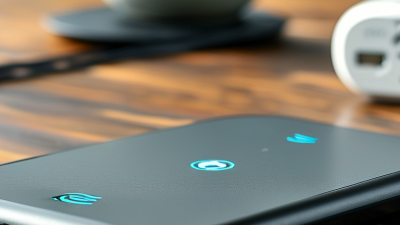
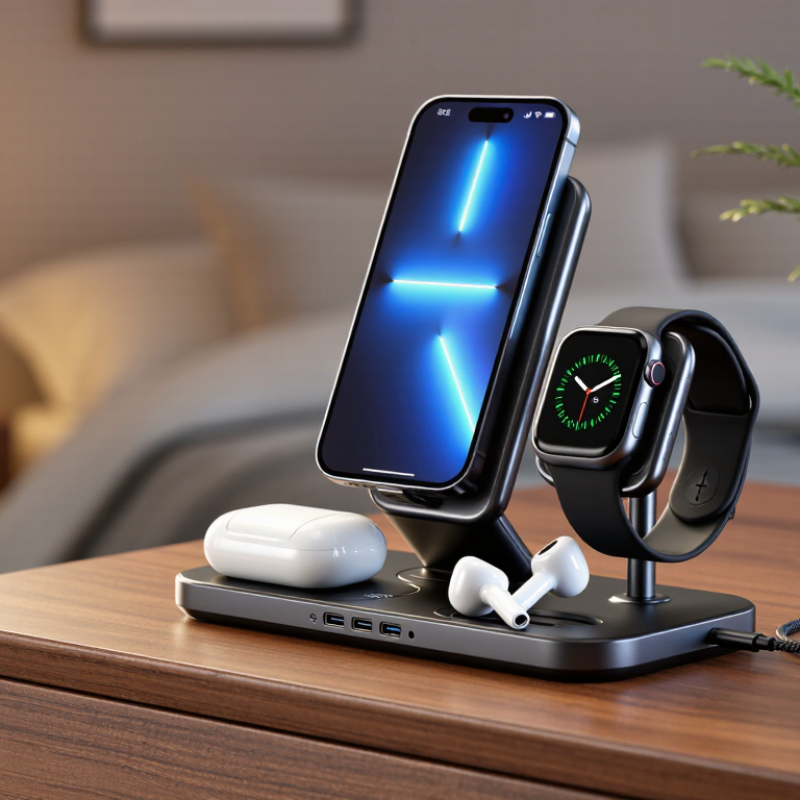
A 3-in-1 wireless charging stand combines three charging areas in one compact frame. It commonly supports a smartphone, smartwatch, and wireless earbuds. The phone rests upright on a magnetic or flat charging surface. A smaller side module handles the watch, while a recessed pad charges the earbuds case. Each zone needs proper coil alignment and suitable power control.
The Wireless Power Consortium reports that more than one billion Qi-compatible devices have shipped worldwide. Its Qi2 development also emphasizes magnetic alignment and improved charging efficiency. Grand View Research’s 2024 Wireless Charging Market report projects annual market growth above 20% through 2030. These figures show rising demand, but they do not guarantee equal performance from every stand.
In practical use, a good stand keeps the phone screen visible beside a bed or desk. It should charge several devices without excessive heat or unstable connections. Check the output rating carefully. Some models share power between zones, so three devices may charge slowly together. Watch compatibility can also be limited by its charging module. I have found that alignment matters more than impressive wattage claims. A phone may look perfectly placed but still charge intermittently. That small gap changes everything. Consumers should verify certification, adapter requirements, temperature control, and independent test results before buying.
China-made 3-in-1 charging stands combine phone, smartwatch, and earbud charging in one compact frame. Their main advantage is desk organization. A single stand can replace three loose cables beside a laptop. Many models use aluminum alloy, reinforced plastic, or a mixed structure. The finish may look simple, but hinge strength matters more than appearance.
Reliable stands should support stable wireless charging, accurate device alignment, and basic temperature control. A good magnetic area keeps the phone upright during calls or video viewing. The watch section should hold its position without wobbling. Some products also include foreign-object detection and overheat protection. These features improve daily safety, but performance still depends on the adapter and charging protocol. I have found that cheaper hinges can loosen after repeated folding. That weakness deserves honest attention.
Tips: Check the recommended power adapter before buying. Test the stand with your own phone case, especially if it is thick. Leave space around the stand for airflow. Do not judge charging speed from appearance alone. Read technical specifications carefully. A small design detail can change everyday convenience._久久爱
China Best Wireless Charging Stand 3 In 1? How to Compare Charging Speed, Compatibility, and Design
A reliable 3-in-1 wireless charging stand should match your devices, not just look impressive. I test charging speed with the same power adapter, cable, and battery level. Phone charging often slows near full capacity or when the stand becomes warm. This detail is easy to miss. A model advertised with high output may deliver less power to each device simultaneously. Check its supported charging standard and required adapter before comparing numbers.
Compatibility needs closer attention. Magnetic alignment works best with compatible phones or cases. Thick cases can weaken the connection. Earbuds may require a precise center position, while some smartwatches need a dedicated charging module. I place each device on the stand for several minutes, then check whether charging remains stable after small movements. It sounds simple. It catches real problems.
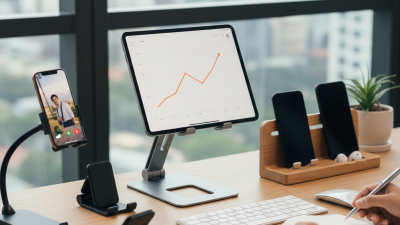
Design affects daily use more than product photos suggest. A weighted base should stay still when you lift your phone. Adjustable angles help with video calls and bedside viewing. The charging surface should leave enough space for a watch strap and earbuds case. Heat vents are useful, but they do not guarantee cool operation. I once preferred a slimmer stand, then disliked its unstable hinge. A slightly larger footprint can be the better choice. My comparison is not perfect, because room temperature and device settings change results. Still, recording charging time, surface temperature, and cable placement creates a more dependable buying decision.
| Comparison Dimension | Configuration A Qi2 magnetic stand |
Configuration B Standard Qi stand |
Configuration C Foldable travel stand |
Configuration D Adjustable premium stand |
|---|---|---|---|---|
| Phone charging standard | Qi2 magnetic wireless charging | Qi-certified wireless charging | Qi2 magnetic wireless charging | Qi2 magnetic wireless charging |
| Maximum phone output | Up to 15 W with a compatible phone | Up to 10 W; some devices may be limited to 5 W or 7.5 W | Up to 15 W with a compatible phone | Up to 15 W with a compatible phone |
| Smartwatch charging | Dedicated magnetic charging area, up to 5 W | Dedicated magnetic charging area, typically 2.5–5 W | Dedicated magnetic charging area, up to 5 W | Dedicated magnetic charging area, up to 5 W |
| Earbuds charging | Qi charging pad, typically 5 W | Qi charging pad, typically 5 W | Qi charging pad, typically 5 W | Qi charging pad, typically 5 W |
| Phone compatibility | Qi2-compatible phones; Qi devices may charge without magnetic alignment | Most Qi-enabled phones; magnetic alignment may require a compatible case or ring | Qi2-compatible phones; suitable for travel use | Qi2-compatible phones; adjustable alignment improves case compatibility |
| Case compatibility | Best with magnetic cases; thick or metal cases can reduce performance | Usually works with thin non-metal cases; alignment is more sensitive | Best with magnetic cases up to approximately 3 mm thick | Supports a wider range of thin cases with adjustable positioning |
| Recommended power adapter | USB-C adapter rated at 30 W or higher | USB-C adapter rated at 25 W or higher | USB-C adapter rated at 30 W or higher | USB-C adapter rated at 30 W or higher |
| Charging efficiency | Generally more consistent due to magnetic alignment | Depends strongly on coil alignment and phone position | Consistent when the phone is correctly aligned | Consistent alignment with additional position adjustment |
| Viewing angle | Fixed upright angle, usually about 60–70° | Fixed upright angle, usually about 60–70° | Adjustable angle, typically about 45–90° | Adjustable angle and height, typically about 45–90° |
| Foldable design | Usually no; designed mainly for desktop use | Usually no; larger fixed footprint | Yes; suitable for bags and business travel | Partly foldable; prioritizes stability over compactness |
| Approximate weight | 250–350 g | 220–320 g | 180–280 g | 350–500 g |
| Material profile | Aluminum alloy frame with silicone contact surfaces | Plastic or aluminum body with silicone pads | Aluminum alloy and reinforced plastic for reduced weight | Heavier aluminum alloy body with a weighted base |
| Safety functions | Over-temperature, over-voltage, foreign-object, and over-current protection | Over-temperature, over-voltage, and foreign-object protection | Over-temperature, over-voltage, foreign-object, and over-current protection | Over-temperature, over-voltage, foreign-object, and over-current protection |
| Best use case | Daily desk charging with reliable magnetic alignment | Users with mixed Qi-enabled devices and a lower purchase budget | Frequent travelers who need a compact charging setup | Home or office users who value adjustability and stability |
| Overall evaluation | Best balance of speed, alignment, and compatibility | Best for basic compatibility and cost control | Best for portability and flexible positioning | Best for premium design, stability, and adjustability |
Note: Actual charging speed depends on the phone, smartwatch, earbuds case, charging protocol, power adapter, case thickness, temperature, and coil alignment. The listed outputs represent common maximum specifications for this product category rather than guaranteed real-world charging rates.
During a practical check, place a phone, watch, and earbuds on their charging areas. Each device should align easily and remain connected when the stand moves slightly. Monitor the surface after thirty minutes. Warmth is normal, but excessive heat, buzzing, or repeated charging interruptions suggest poor design. A stable base, firm hinges, and a protected cable port also indicate better manufacturing quality. Small details matter here.
Materials deserve attention too. A heavy, non-slip base reduces accidental falls, while smooth edges protect cables and fingers. Read the manual for compatible power adapters and maximum combined output. Some stands advertise three-device charging but slow dramatically under full use. I have found that attractive finishes can hide weak hinges. That is easy to miss. Check the warranty, safety markings, and return policy before purchase. Independent reviews with temperature readings are more useful than short promotional comments.
China Best Wireless Charging Stand 3 In 1?
How to Choose the Best 3-in-1 Charging Stand in China
Choosing a 3-in-1 charging stand in China requires more than checking its appearance. Confirm compatibility with your phone, smartwatch, and wireless earbuds before discussing price. Some stands support only selected charging protocols. Ask for written specifications, output levels, and independent safety test reports.
Look closely at the structure. A stable base should not slide across a desk during one-handed phone removal. The charging surface needs accurate coil alignment, especially with thicker protective cases. Test the hinge repeatedly. It should remain firm without feeling stiff. Heat matters too. During testing, charge three devices for at least thirty minutes and check the stand’s temperature. Warm is normal. Excessive heat is a warning sign.
Work with a supplier that can provide samples, factory inspection records, and clear packaging details. Confirm plug types, cable length, warranty terms, and replacement procedures before placing a bulk order. Ask whether the same components will be used in mass production. This small question can reveal quality-control gaps. My own checklist is not perfect. A visually excellent sample may still hide weak internal parts. Request a production sample when possible, then compare its weight, finish, charging speed, and cable connection with the approved unit. A lower price can be attractive, but unstable charging creates returns, complaints, and wasted time.
How to Choose the Best 3-in-1 Charging Stand in China
Qi Baseline Power Profile provides up to 5 W, while the Qi Extended Power Profile and Qi2 commonly support up to 15 W. When choosing a 3-in-1 charging stand, check the supported charging profile, device alignment, thermal management, and whether the stand includes a suitable USB-C power adapter. Actual charging speed depends on the device, receiver coil, temperature, and power adapter.