2026 Top Charging Dock Manufacturers for Global Buyers

Choosing among the 2026 Top Charging Dock Manufacturers for Global Buyers requires more than comparing wattage or product photos. A dependable Charging Dock must support stable power delivery, safe heat control, accurate port performance, and long daily use. Buyers should examine USB-C compatibility, wireless charging efficiency, cable quality, firmware support, and warranty response. Small details matter. A loose hinge can damage a device. Poor ventilation can create uncomfortable heat on a crowded office desk.

Jeff Ravencraft, President and COO of the USB Implementers Forum, has emphasized, “USB Type-C is designed to be a flexible, scalable, and future-proof connector.” This principle remains useful when evaluating manufacturers across different markets. Leading suppliers should demonstrate clear testing procedures, traceable components, and practical certification evidence. Product samples deserve real inspection, not only brochure review. Test several devices together. Check charging speed after an hour. Notice whether the dock becomes hot, noisy, or unstable.

Global buyers also need dependable communication. A manufacturer may offer excellent hardware but weak documentation or slow after-sales support. That weakness can become expensive across hundreds of units. Some rankings may overvalue design and undervalue repairability. That deserves more reflection. The best supplier is not always the largest factory. It may be the manufacturer that reports limitations honestly, updates specifications carefully, and responds quickly when a batch performs differently. This guide examines those practical differences, helping distributors, retailers, and enterprise purchasers make more confident decisions in a competitive Charging Dock market.
2026 Top Charging Dock Manufacturers for Global Buyers

What Defines a Charging Dock Manufacturer in 2026

In 2026, a charging dock manufacturer is more than a factory assembling plastic shells and cables. It designs power delivery, thermal control, connector life, and user safety as one system. Experienced teams test docks with phones, tablets, watches, and earbuds from different generations. They measure heat beside a sunny window, not only inside a clean laboratory. Small details matter. A loose hinge, unreadable indicator, or short cable can disrupt an entire workday.

Reliable manufacturers publish electrical specifications, test methods, and compatibility limits before buyers place large orders. They maintain traceable component records and inspect incoming parts, firmware, and final assemblies. For global buyers, capability also includes multilingual documentation, stable packaging, and responsive after-sales support. A serious supplier can explain minimum order quantities, production capacity, sampling steps, and replacement procedures without vague promises. Independent testing helps, but transparent internal records matter too. Claims should be checked.

The strongest manufacturers design for repair, modular replacement, and responsible material use where practical. They monitor charging efficiency across voltage conditions and review failure data after shipment. Yet no manufacturer predicts every transport delay, connector failure, or regional demand shift. That weakness deserves discussion, not polished marketing. Buyers should request pilot samples, run daily-use trials, and compare performance after repeated plugging. A dock that survives real desks, crowded outlets, and rushed mornings earns trust gradually. Performance records should show what happens after months, not only after one successful test.

Core Products and Technologies Offered by Leading Manufacturers

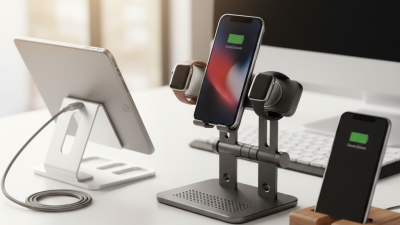
Leading charging dock manufacturers now build more than simple power stands. Their core products include multi-device docks for phones, tablets, watches, and earbuds, plus commercial charging stations for electric vehicles. In my sourcing work, buyers often compare port layout, thermal control, cable replacement, and service access before appearance. The IEA’s Global EV Outlook 2024 reported more than four million public charging points worldwide at the end of 2023. That growth increases demand for reliable AC chargers, compact DC systems, load management, and network-connected payment controls.

USB-C Power Delivery remains central to consumer docks, supporting dynamic power allocation across several devices. Wireless charging models increasingly use magnetic alignment and foreign-object detection. The Wireless Power Consortium has promoted the Qi2 standard to improve alignment and charging consistency. For EV equipment, buyers should examine IEC 61851 compliance, residual-current protection, enclosure ratings, and OCPP compatibility. These details affect installation, maintenance, and regional approval.

Performance can vary sharply. A dock may look premium and still run warm under full load. Manufacturers should publish efficiency curves, standby consumption, surge protection, and tested operating temperatures. The IEA expects electric car sales to exceed 17 million globally in 2024, strengthening the case for scalable charging hardware. Yet global buyers should remain cautious: connector standards, grid conditions, and certification rules differ by market. Some product sheets remain vague. That is a weakness worth challenging.

2026 Top Charging Dock Manufacturers for Global Buyers - Core Products and Technologies Offered by Leading Manufacturers

Manufacturer Profile Core Product Categories Main Charging Technologies Typical Power Range Connectivity and Expansion Safety and Compliance Features Common Global Buyer Applications
Multi-device desktop dock specialist
Designed for offices, hotels and shared workspaces
Laptop docks, tablet charging stations, phone charging trays and multi-port desktop hubs USB Power Delivery, USB-C charging, intelligent power allocation and optional wireless charging Approximately 65 W to 240 W input; device-level outputs commonly range from 5 W to 100 W USB-C, USB-A, HDMI, DisplayPort, Ethernet, SD card and audio interfaces Over-current, over-voltage, over-temperature and short-circuit protection; RoHS and CE-oriented product configurations Corporate offices, education facilities, business travel and hot-desking environments
Enterprise notebook docking manufacturer
Focused on productivity and IT manageability
Universal laptop docks, monitor docks, conference-room docks and enterprise charging cradles USB-C PD, Thunderbolt-compatible designs, DisplayLink-based multi-display support and firmware management Up to 100 W host charging in many models; higher-power external adapters are used for multi-port systems Dual or triple display output, Gigabit Ethernet, USB 3.x, USB-C data and audio Power monitoring, thermal control, electromagnetic compatibility testing and region-specific safety approvals Large enterprises, government offices, call centers and managed IT deployments
Mobile-device charging station producer
Optimized for smartphones, tablets and handheld devices
Multi-bay charging cabinets, tablet carts, phone lockers and compact charging stands USB-C PD, USB Battery Charging specifications, adaptive current control and cable-management systems Typically 60 W to 1,000 W total system capacity, depending on bay count and enclosure size USB-C and USB-A ports, status indicators, keyed access, locking doors and optional network monitoring Ventilation, fire-resistant enclosure materials, overload protection and cable isolation between charging bays Schools, hospitals, retail stores, logistics sites and public-sector facilities
Wireless charging dock specialist
Focused on cable-free desktop and vehicle use
Single-device stands, multi-device charging pads, bedside docks and vehicle charging mounts Qi and Qi2 magnetic wireless charging, foreign-object detection and alignment-assisted charging Common wireless output levels include 5 W, 7.5 W, 10 W, 15 W and selected higher certified profiles USB-C input, magnetic alignment, LED indicators and optional smartwatch or earbud charging areas Foreign-object detection, temperature monitoring, over-current control and wireless interoperability testing Consumer electronics, hospitality, automotive accessories and premium workplace environments
Industrial and rugged dock manufacturer
Built for demanding operating conditions
Rugged tablet docks, handheld computer cradles, vehicle docks and industrial charging bays Pogo-pin charging, locking mechanical interfaces, USB-C PD and application-specific DC charging Approximately 15 W to 180 W per dock, with system capacity determined by the number of bays Ethernet, serial interfaces, barcode-scanner integration, GPIO, USB and vehicle power input Vibration resistance, dust and water protection options, impact-resistant housings and industrial EMC testing Warehousing, transportation, field service, manufacturing and public-safety operations
GaN power and charging-system manufacturer
Focused on compact, high-efficiency power conversion
Compact charging docks, high-output desktop chargers, modular power stations and travel docks Gallium nitride switching technology, USB-C PD, programmable power supply and dynamic load balancing Common product classes range from 65 W to าข 240 W, with multi-port power sharing Multiple USB-C ports, USB-A legacy ports, detachable AC cables and international plug options Efficiency optimization, thermal derating, surge protection, short-circuit protection and regional electrical approvals Travel retail, professional users, compact workstations and international distribution
Custom OEM and private-label dock supplier
Provides design-to-production services for global buyers
Customized charging docks, branded enclosures, retail packaging and application-specific charging systems USB-C PD, Qi2, pogo-pin, magnetic alignment, custom firmware and buyer-defined power architecture Usually specified from 10 W to 240 W per system according to device compatibility and thermal design Custom port combinations, molded cable assemblies, displays, indicators and mechanical locking features Compliance support for CE, FCC, UKCA, RoHS, REACH and other destination-market requirements Retail programs, hospitality projects, corporate gifts, device fleets and specialized equipment
Smart managed charging infrastructure provider
Combines charging hardware with monitoring software
Networked charging cabinets, fleet charging stations, access-controlled docks and asset-management platforms USB-C PD, centralized load management, device identification, remote diagnostics and charging-cycle scheduling From approximately 100 W for desktop units to several kilowatts for large charging cabinets Ethernet, Wi-Fi, cellular connectivity, RFID or PIN access, dashboards and API integration User authentication, electrical fault detection, audit logs, remote firmware management and configurable shutdown controls Large device fleets, schools, healthcare networks, logistics companies and public charging programs

Note: Power ratings, interfaces and certifications vary by model, destination market and device compatibility. Buyers should verify current technical datasheets and approval documents before procurement.

Key Criteria for Evaluating Global Charging Dock Suppliers

A reliable charging dock supplier should be judged beyond appearance and unit price. IDC reported approximately 1.24 billion smartphone shipments in 2024, showing the scale of device compatibility requirements. Ask suppliers for tested compatibility lists, charging profiles, connector specifications, and failure rates. A dock that charges quickly on a clean desk may perform poorly beside heat, dust, or unstable power.

Power management deserves close inspection. The IEA reported more than 17 million electric cars sold globally in 2024, while public charging points exceeded five million. This growth raises expectations for safer, faster, and more adaptable charging equipment. Request evidence from accredited laboratories, including temperature testing, surge protection, cable durability, and repeated plug-in cycles. Do not accept vague claims such as “universal” without test conditions.

Supplier reliability also depends on production discipline. Review factory audit records, batch traceability, spare-part policies, and regional technical support. Check whether firmware updates are controlled and documented. A polished sample can still hide inconsistent assembly. I would also compare warranty returns by production batch, not only the average rate. That detail is easy to miss. Freight capacity, packaging quality, and response times matter when products cross borders. Environmental declarations and repair options strengthen credibility, although they should be verified rather than assumed. (Sources: IDC Worldwide Quarterly Mobile Phone Tracker, 2025; IEA Global EV Outlook 2025.)

2026 Top Charging Dock Manufacturers for Global Buyers

Key Criteria for Evaluating Global Charging Dock Suppliers

This neutral 100-point procurement benchmark prioritizes measurable supplier evidence rather than brand visibility. Safety and compliance documentation receive the highest weighting, followed by charging performance, device compatibility, thermal reliability, after-sales support, supply capability, and documentation quality. Buyers should verify certificates, test reports, product samples, and contractual terms before placing an order.

Regional Manufacturing Strengths and International Market Reach

Regional manufacturing strength now shapes the real value of charging dock suppliers.

The IEA’s Global EV Outlook 2024 recorded more than four million public charging points worldwide at the end of 2023. Global additions increased by over 40% that year. China provides unmatched production scale, dense component networks, and competitive pricing. European manufacturers often emphasize safety testing, design quality, and regional conformity requirements. North American suppliers commonly focus on fleet integration, software control, and rugged outdoor operation.

International reach is less simple. A supplier may export widely, yet lack local service technicians or replacement inventory. That weakness matters when a dock fails beside a busy logistics depot. The World Bank notes that reliable infrastructure depends on maintenance, not equipment volume alone. Buyers should therefore examine factory audits, annual production capacity, warranty response times, and certification coverage. One overlooked detail: regional power standards can change installation costs sharply. Paperwork is not performance.

Tips: Request test reports, not marketing claims. Check connector compatibility, surge protection, and remote diagnostics. Ask for spare-part delivery times in your target country. Compare at least three operating sites, including one harsh-weather location. The best supplier is not always the cheapest. Sometimes the “global” option needs more local support.

How Global Buyers Can Select the Right Charging Dock Partner

Selecting the right charging dock partner requires more than comparing unit prices. Global buyers should examine design capability, production control, and long-term support. A reliable manufacturer can explain power distribution, heat management, connector durability, and compatibility across devices. Ask for engineering drawings, test records, and samples from current production.

Inspect the details.

During supplier evaluations, I look for clear traceability from incoming components to final inspection. A capable factory should identify materials, production dates, testing equipment, and responsible operators. Buyers should also verify relevant safety documentation for each target market, rather than accepting generic certificates. This step often exposes gaps in quality control.

Request a pilot order before signing a large contract. Test the dock under daily conditions: repeated plugging, uneven device loads, cable movement, and overnight charging. Measure temperature at the housing and power components. A partner that shares failure data is usually more trustworthy than one promising zero defects. However, no checklist is perfect. I once focused heavily on electrical performance and underestimated packaging damage during shipping. That mistake changed my review process.

Discuss minimum order quantities, replacement procedures, firmware support, and communication response times. A strong partner should provide realistic lead times and report delays early. Buyers also need written agreements covering inspection standards, warranty handling, intellectual property, and change approval. The cheapest supplier may become expensive when revisions, returns, or unexplained substitutions appear later. Depth matters.